Wakeboarding for Beginners in Thailand: First-Timer Guide
Yes, you can learn to wakeboard in Thailand with zero experience, and a cable park is the easiest place to do it. Book a beginner session on a small 2-tower cable, wear the life vest the park gives you, and most first-timers are riding short stretches within an hour. This guide covers how it works, what to bring, how to get up on your first start, and which parks are set up for beginners.
What is cable wakeboarding?
Wakeboarding means riding a short board, feet strapped into bindings, while something tows you across the water. At a cable park that's an overhead cable strung between towers, not a boat. It's cheaper per hour, quieter, and easier to learn on, because the pull is steady and the water is flat.
Thailand has cable parks around Bangkok, Pattaya, Phuket, Chiang Mai and Hua Hin. See Wakeboard Bangkok: Every Wake Park Within 2 Hours, Wakeboard Pattaya: Thai Wake Park Pattaya and Chilling Cable and Phuket Wake Park Guide: Wakeboarding in Phuket (2026) for regional rundowns.
Full-size cable vs 2-tower System 2.0
Cable parks run two kinds of systems, and choosing the right one for your first day matters more than anything else.
Full-size cable
A full-size cable is a large loop, usually five towers around a lake, pulling several riders at once at a fixed speed. You have to ride the corners, and if you fall you swim to the bank and walk back to the start dock. That's great once you can ride, but exhausting while you're still falling every few metres.
2-tower System 2.0
A 2-tower or "System 2.0" cable is a straight line between two towers that pulls one rider back and forth. An operator controls it the whole time, which is why it suits first-timers:
- Adjustable speed. The operator can start you slowly and speed up as you improve.
- Less swimming, more tries. The operator stops when you fall and brings the handle back, and a coach gives feedback after each attempt.
- No corners yet. You learn to stand and ride straight before worrying about turns.
Many larger parks have both: a full-size cable for regulars and a separate 2.0 training cable for beginners.
Can non-swimmers wakeboard?
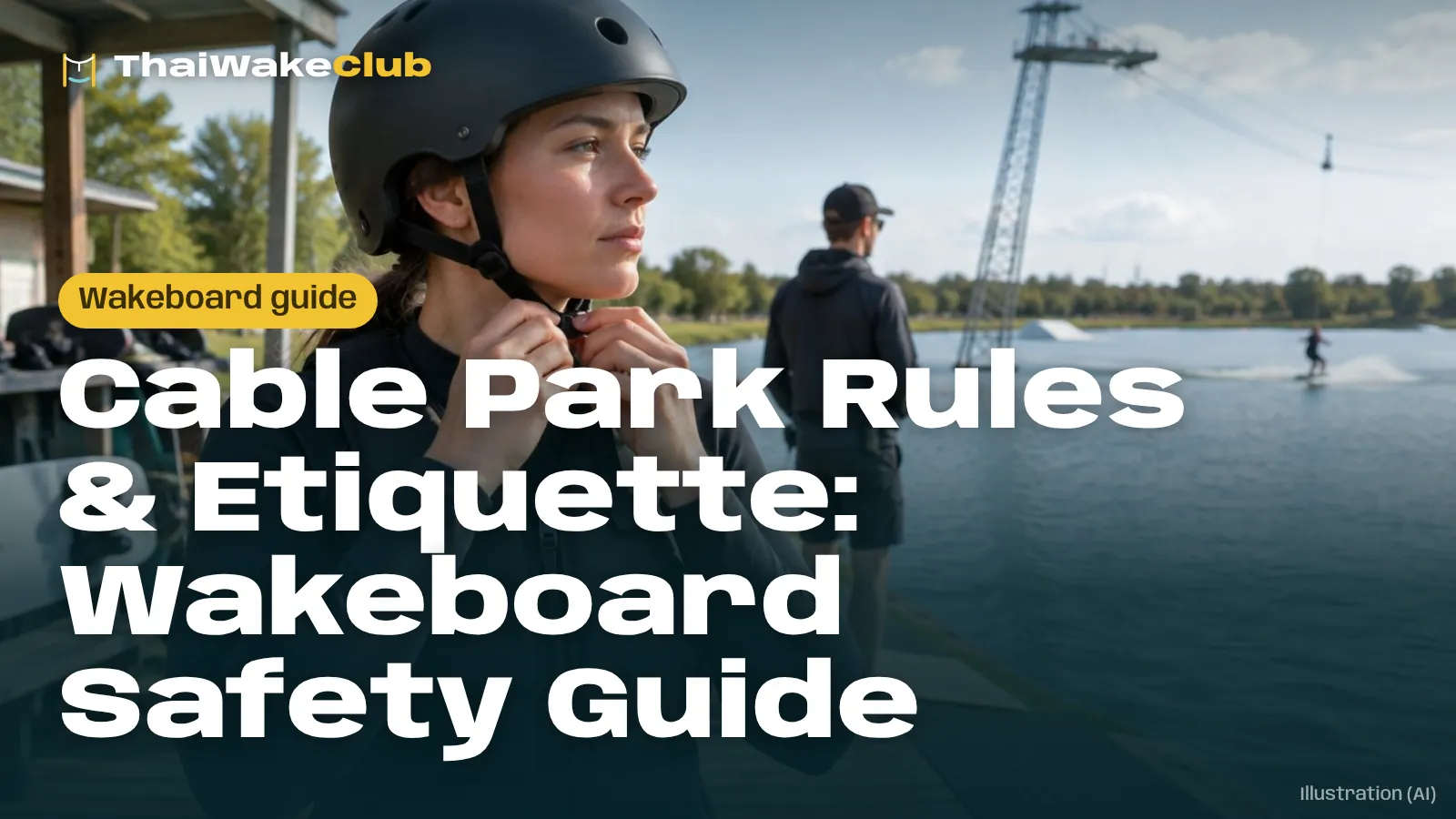
Generally yes. Every rider wears a life vest, which parks include in the ticket, and it keeps you afloat while you wait for the handle or swim to the edge. You do need to be comfortable getting your face wet. If you can't swim, tell the staff before you start. They may keep you on the training cable or near the dock, and you should always keep your vest on and fastened.
What to wear and bring
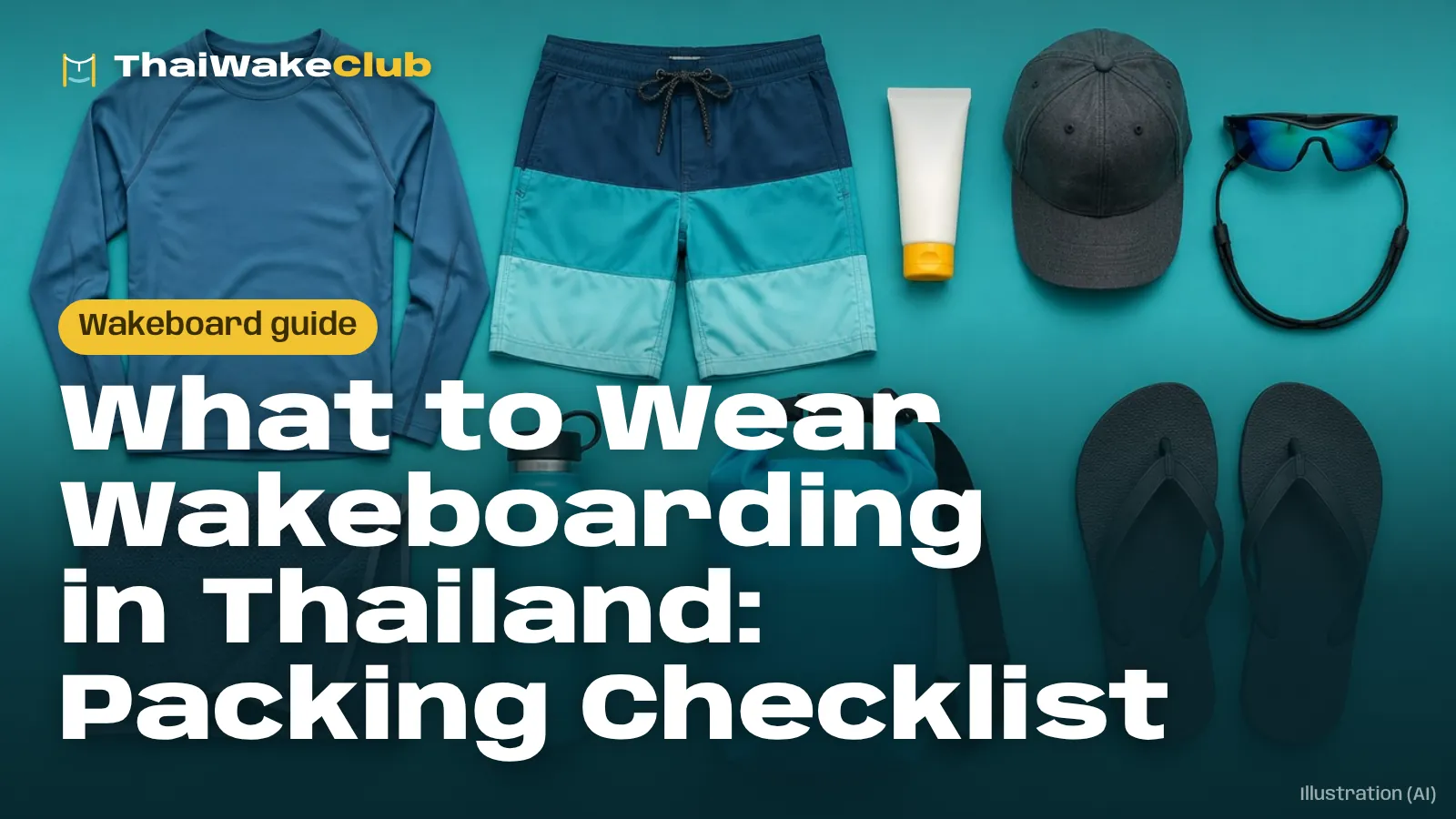
- Swimwear plus a rash guard or quick-dry T-shirt. It protects against sun and the vest rubbing. Board shorts are fine.
- Sunscreen, ideally reef-safe and water-resistant. Put it on 20 minutes before you ride.
- A towel, a change of clothes and flip-flops for the dock and walkways.
- A waterproof phone pouch if you want photos. Leave valuables at home, because not every park has confirmed lockers.
- Water and electrolytes. It's hard work in the heat.
Board, vest and usually a helmet come with the ticket or lesson at most parks. Check what's included on each park page.
Your first start, step by step
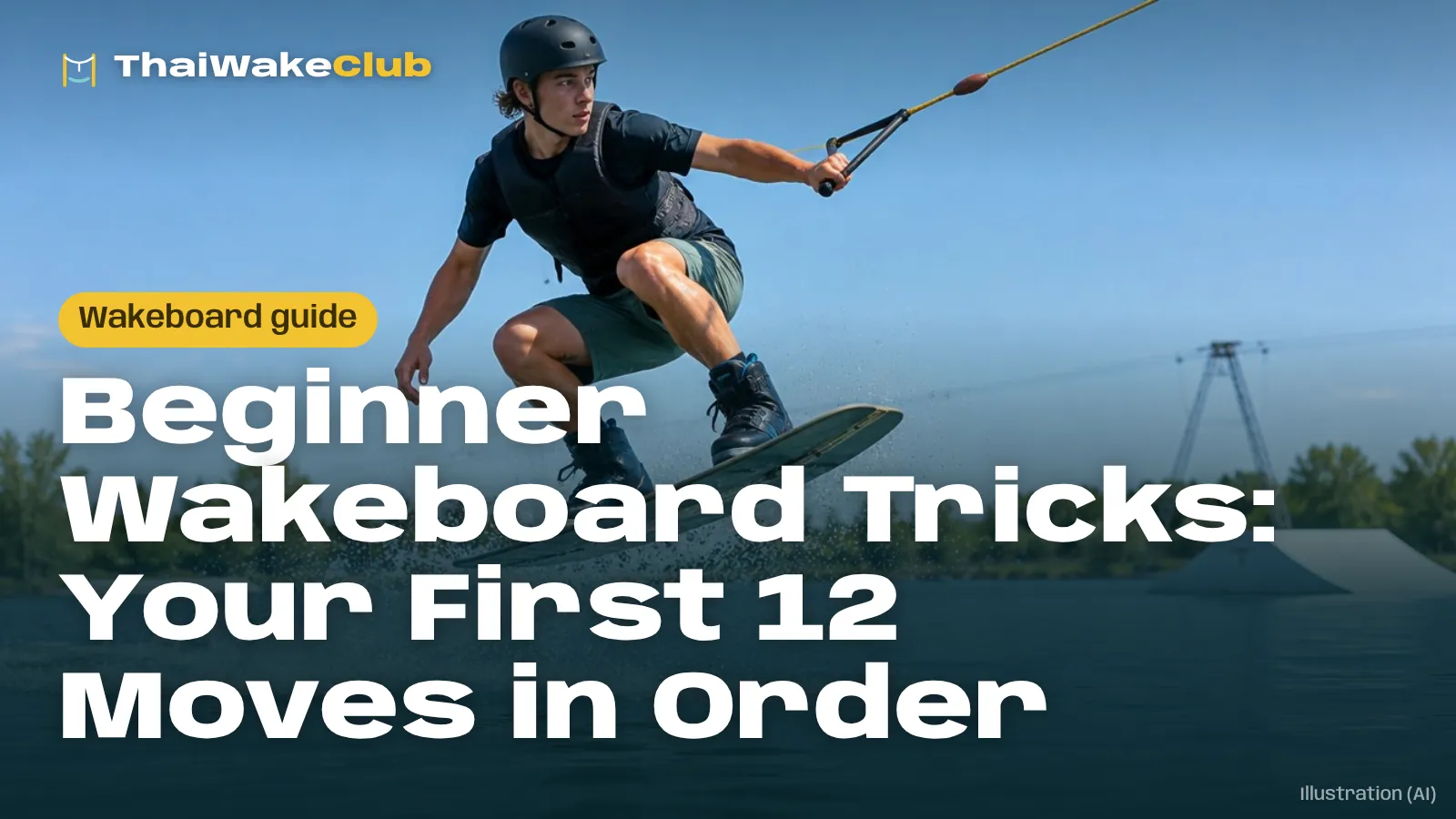
Most beginner cables use a deep-water start: you sit in the water with the board on your feet and the cable pulls you up. Some parks use a dock start, where you sit on the edge of the start platform and the cable pulls you off it. The technique is almost the same either way.
- Get into position. Sit back in the water or on the dock with knees tucked to your chest and the board in front of you, tips out of the water.
- Hold the handle low. Use both hands, arms straight, with the handle sitting just over your knees. Don't pull it toward you.
- Let the cable do the work. When it pulls, resist the urge to stand up fast. Stay compact and let it lift you out of the water.
- Rise slowly into a crouch. Once the board is planing on the surface, stand up gradually, keeping your knees bent like you're sitting on a high stool.
- Turn sideways. Rotate the board so your front foot points toward the cable, and keep the handle near your front hip.
- Look ahead. Look at the next tower, not at your board. Your body follows your eyes.
- Weight on the back foot. Lean slightly back against the pull, keeping the front of the board up.
Expect to fall several times. Everyone does.
Common beginner mistakes
- Standing up too early. The single most common fault. Stay low until the board is gliding.
- Pulling the handle in. Bending your arms makes the rope go slack, then snap tight. Keep your arms long.
- Straight legs. Locked knees can't absorb chop or tension changes. Keep them bent.
- Looking down. Watching your feet tips your weight forward and you catch an edge.
- Leaning forward. Weight on the front foot digs the nose in. Stay centred to slightly back.
- Holding on after a fall. If you go down, let go of the handle right away.
- Riding without rests. Forearms tire fast, so take short breaks.
Kids and wakeboarding
Children can learn on 2-tower cables, but rules vary by park. Thai Wake Park Lumlukka offers an Intro Kid Lesson on its training cable for ages 6 to 14 or under 150 cm, listed at 1,595 THB for 1 hour. ESC Thai Wake Park lists the same kids lesson for ages 6 to 14. Both are booked through the park's LINE. Phuket Wake Park lists child prices too. Other parks don't publish age limits, so message them before you go.
Beginner-friendly parks
All prices are as of October 2026. Check with the park, because rates change. For full comparisons see Wakeboarding Price Thailand 2026: Wake Park Prices Compared.
Bangkok area
- Thai Wake Park Lumlukka offers a structured 2.5-hour Beginner Lesson for 995 THB on Sundays from 09:30, with a coach in the water and 2-tower training cables. Book ahead.
- ESC Thai Wake Park runs the same 995 THB Beginner Lesson on Saturday mornings on its "Little Bro" 2.0 cable.
- Neverdry Wakepark in Bang Yai has a shallow, clear-water beginner pool on a 2-tower system. Coaching is included in the hourly rate (from 600 THB/hour in the morning).
- WakeGarden Wake Park in the Bang Na area opened in February 2026 with a beginner-focused 2.0 cable and owner coaching. Morning slots are listed at 800 THB/hour.
- Varapa Wakepark has a "green line" 2.0 cable suited to beginners, from 600 THB/hour per pond on weekdays (no rider limit, so friends can share).
- Taco Lake is the budget option at 400 THB for the day. It has a full-size cable only, but beginners start on kneeboards with basic instruction.
Not sure which to pick? ESC Thai Wake Park vs Thai Wake Park Lumlukka vs Taco Lake compares three popular Bangkok options.
Elsewhere in Thailand
- Thai Wake Park Pattaya: a 1.5-hour Low Speed Session with a coach on hand, 450 THB.
- Phuket Wake Park: beginners start on a separate 2.0 training cable or kneeboard.
- Kite Cable Thailand near Pran Buri: a short beginner 2.0 line on a chest-deep lake.
- Lakehouse CNX in Chiang Mai: 30-minute private beginner session with coaching, 750 THB.
When to ride: weather and timing
- Best season: the cool season, roughly November to February, has lower humidity and more comfortable temperatures.
- Avoid midday heat. Late morning to mid-afternoon is the hottest and most sun-exposed. Mornings and late afternoons are easier on beginners, and some parks charge less in the morning.
- Thunderstorms mean get out. If you hear thunder or see lightning, leave the water straight away, even if the cable is still running. A lake with a steel cable overhead is no place to be in a storm. Parks usually stop the cable, but don't wait to be told.
- Wind. Strong gusts make the water choppy and the pull uneven, so wait for it to calm down.
- Rainy season (roughly May to October) often brings afternoon showers, so ride in the morning.
FAQ
Is wakeboarding hard for a first-timer?
Getting up is the hard part. On a 2-tower cable with a coach, most people manage short rides in their first session. Riding corners on a full-size cable takes longer.
How much does a first wakeboarding session cost in Thailand?
As of October 2026, beginner options start around 400 to 450 THB (Taco Lake, TWP Pattaya Low Speed Session), and structured lessons cost about 995 THB at TWP Lumlukka and ESC. Check with the park, as prices change.
Do I need to bring my own board?
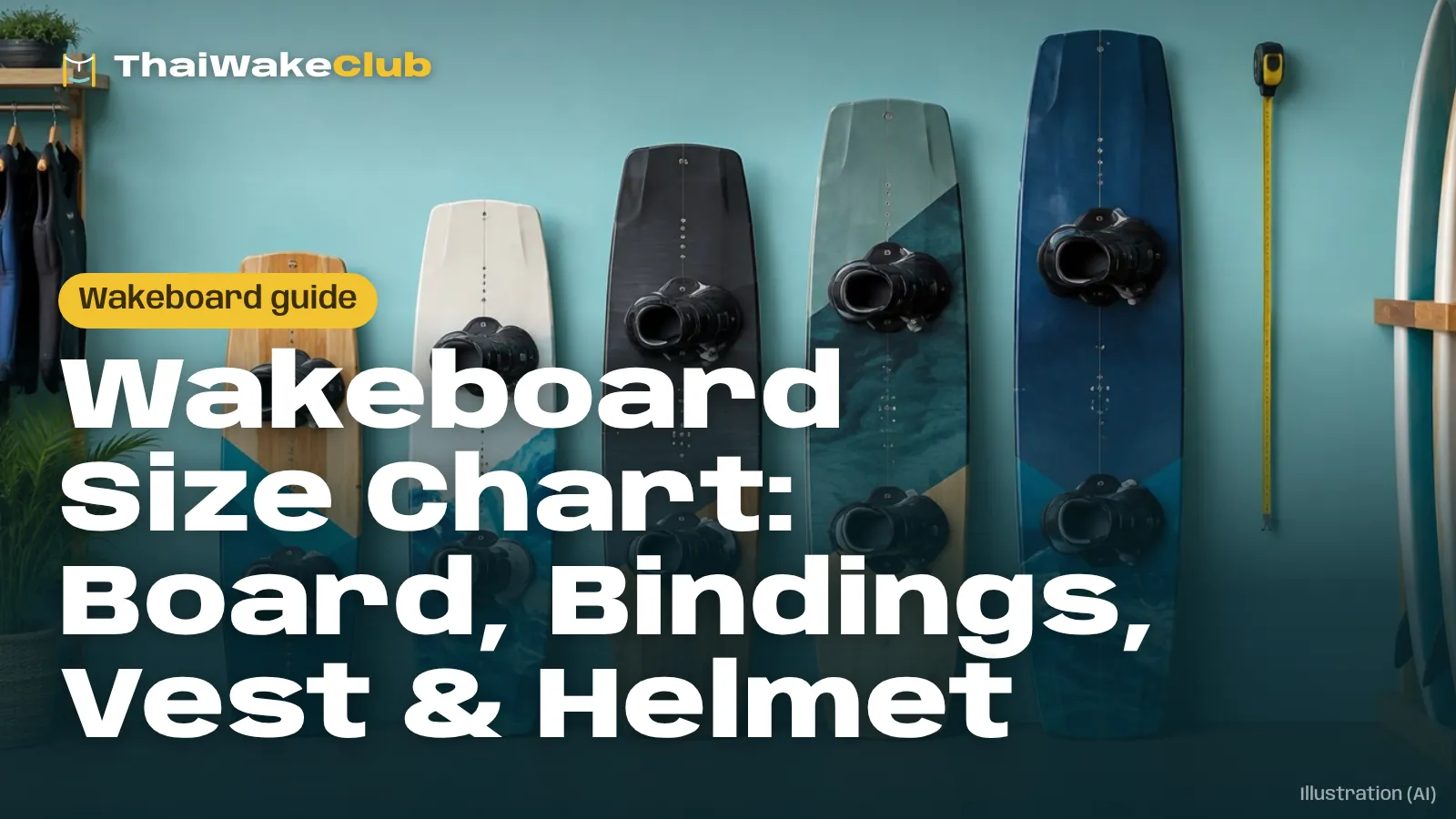
No. Parks provide a beginner board and life vest with the ticket or lesson, and most include a helmet.
Can I wakeboard if I can't swim?
Usually yes, with the life vest always on. Tell the staff first so they can keep you on the training cable.
What age can kids start?
Thai Wake Park's kids lessons are for ages 6 to 14 (Lumlukka also takes kids under 150 cm). For other parks, ask before you visit.